
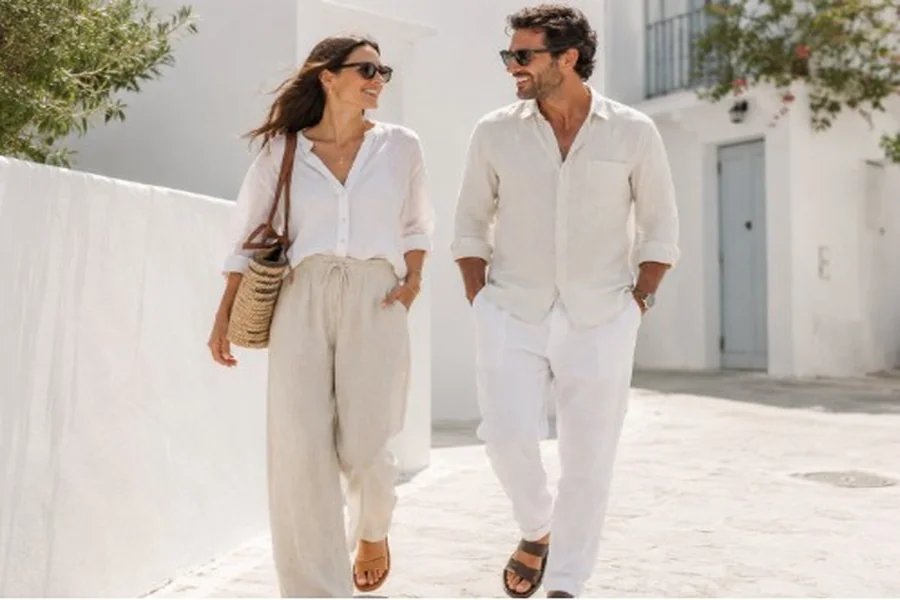
Summer heat makes dressing harder because comfort and polish start pulling in opposite directions. A heavy shirt looks neat in the mirror but feels unbearable outside. Loose clothes feel cooler, but they can also look careless if the shape is wrong. Learning how to dress well in summer heat is not about wearing less or buying trendier pieces. It is about choosing fabric, fit, and colour in a way that keeps the outfit looking intentional.
A few deliberate choices made before you open your wardrobe door are all it takes. The right fabric on a 35-degree afternoon feels like a light breeze. The wrong one feels like a punishment. And beyond fabric, the way a piece fits — and the colour you reach for — makes the difference between looking put-together and looking like you’ve been outside too long. This guide covers all three, then gives you three outfit formulas for the situations where summer heat actually matters.
How to Dress Well in Summer Heat Starts with Fabric
Why Breathable Fabrics Change Everything
Your body cools itself by sweating — but that only works if the moisture can actually escape. Fabrics that trap heat against your skin short-circuit the whole process, leaving you sticky and uncomfortable no matter how loose the garment is. The solution isn’t to wear less; it’s to wear smarter.
Fabrics behave very differently once the temperature rises. When comparing breathable fabrics, look beyond the fibre name and pay attention to weave, weight, and whether air can move through the garment. For everyday dressing, the practical version is simple: lightweight linen, cotton, chambray, and open-weave materials usually feel easier on the skin, while dense non-performance synthetics often hold heat for longer.
The Everyday Fabrics Worth Reaching for First
Linen is the gold standard for summer. It’s made from flax fibres that naturally allow airflow; it gets softer with wear, and that slightly rumpled texture it develops throughout the day has become a summer aesthetic in its own right — so don’t stress about ironing it to perfection.
Cotton — the lightweight variety — is nearly as good and far more versatile in terms of styling. The keyword is lightweight: a thin poplin cotton shirt feels nothing like a heavy Oxford-weave one. When in doubt, hold it up to a window. If light passes through, it’ll work in the heat.
Chambray looks like denim but weighs almost nothing, which makes it one of the more underrated summer fabrics. It takes colour well, works for both casual and smart-casual settings, and doesn’t show sweat the way lighter solid-colour cottons do.
Viscose and modal are worth mentioning too — they drape well and often feel cool against the skin, though they need a bit more care when washing. Be cautious with high-polyester everyday garments unless they are performance fabrics designed for moisture control; dense non-performance polyester can feel warmer and hold odour more noticeably on hot days.
Fit and Silhouette Matter More Than You Think
Loose vs Fitted — Finding the Sweet Spot
There’s a misconception that dressing for summer heat means going as loose as possible. In practice, an oversized everything — shapeless top, wide trousers, chunky shoes — can read as sloppy rather than relaxed. The better approach is contrast: one piece with some structure paired with one that has room to breathe.
A tailored linen shirt tucked into relaxed-fit trousers. A fitted T-shirt with wide-leg linen pants. A structured midi skirt with a loose, untucked blouse. These combinations work because the silhouette has intention even when the fabric is light. The eye reads it as a considered outfit, not someone who grabbed the first thing off the floor.
For men especially, slightly relaxed — not baggy — is the sweet spot for trousers. A pair that skims the thigh without clinging reads as modern and allows airflow. The same logic applies to shirts: untucked is fine, but a shirt that’s two sizes too large just looks unfinished.
The Shapes That Create Airflow Without Looking Shapeless
Certain cuts tend to feel easier in hot weather:
- Wide-leg trousers and palazzo pants allow more air movement around the legs, especially compared with tight jeans or narrow synthetic trousers.
- A-line and wrap skirts give the body more room to move while still looking structured enough for everyday wear.
- Open-weave knits and eyelet cotton add texture and visual interest, so they look more intentional than a plain T-shirt while still feeling lighter.
- Sleeveless tops in a slightly relaxed fit balance coverage and coolness, and they can sit under an open linen shirt when the sun gets strong.
Colour Logic for Hot Weather Dressing
Why Light Colours Are a Practical Choice, Not Just a Trend
Dark colours generally absorb more sunlight, which is why they often feel hotter during long periods outdoors. A black cotton T-shirt may look sharp, but on a sunny afternoon, it can feel less forgiving than the same shirt in white, cream, or light grey. For days involving walking, commuting, or outdoor errands, colour choice becomes a practical comfort decision.
White, cream, soft beige, light grey, and pastels are the obvious solutions — and they dominate summer fashion for good reason. They reflect light, make outfits feel cohesive with minimal effort, and tend to photograph well in the bright natural light that summer brings.
How to Add Personality Without Reaching for Dark Tones
If head-to-toe neutral feels too plain, the trick is to use colour as an accent rather than a base. One piece in a strong tone — a terracotta linen shirt, a cobalt wide-leg trouser, a rust-coloured sundress — anchored with neutral basics around it gives you a standout look without absorbing heat across your whole outfit.
Prints are another way to bring visual interest while staying light. Stripes, small florals, and geometric patterns on a white or cream base add personality without sacrificing the heat-reflecting properties of the background colour. Some of the sharpest summer looks — in editorial fashion and on the street — rely entirely on this formula.
How to Dress Well in Summer Heat from Workday to Evening
Theory is useful until you’re standing in front of your wardrobe at 8 am. These three formulas are built for real summer situations — not photoshoots or resorts — and can be assembled from pieces you probably already own or can find easily.
The Workday that Starts Indoors and Ends Outside
A lightweight cotton or linen shirt in a solid light colour — worn either tucked or half-tucked — with slim-cut or tapered chinos in stone, sand, or light grey. Keep accessories light: canvas or leather loafers, a simple belt, and no heavy layers that make the outfit feel hotter than it needs to be.
For women: a wrap dress in a breathable fabric, flat mules or sandals, and a compact crossbody bag. Or a tucked blouse with a midi skirt in a fabric that moves — the same formula in different proportions.
The common thread is nothing that requires constant adjusting or that looks wilted by noon. These pieces are structured enough for a professional setting but composed of materials that won’t make you miserable the moment you step outside.
The Casual Weekend Errand or Outing
This is where many summer outfits fall apart, especially on errand days, market runs, short commutes, or casual lunches. A plain linen or slub cotton T-shirt works better than a worn-out gym shirt, especially when paired with shorts that have a clean hem and a proper inseam. Clean white trainers, simple sandals, or slip-on shoes keep the look easy without making it careless.
For women, a casual cotton or linen-blend dress can be one of the most practical choices in real heat. It gives airflow, needs little coordination, and still looks intentional. A light shirt worn open over a sleeveless top also works when the sun is strong or when you move between outdoor heat and indoor air conditioning.
The Warm Evening with Friends
Evenings in summer are when most people want to look their best, and the temperature usually cooperates enough to allow it. A linen or lightweight cotton shirt in a solid earthy or warm tone — olive, terracotta, rust — with dark or mid-wash trousers and clean leather shoes or loafers is a reliable formula that photographs well and reads as intentional without being overdressed.
For women: a slip dress or a co-ord set in a printed fabric you’ve been saving for the right occasion. Summer evenings are when those pieces earn their place. Keep accessories simple — one statement earring or a cuff bracelet is usually enough.
The pieces that work across all three scenarios tend to have one thing in common: the fabric is doing real work. If you sew your own clothes or refresh summer basics with specific weights and weaves in mind, buying fabric by the yard makes it easier to choose material for the climate instead of settling for whatever a finished garment offers.
Summer dressing isn’t a concession — it’s a different set of constraints that rewards thinking rather than effort. Get the fabric right, let the silhouette breathe, lean into lighter colours, and match your outfit to where you’re actually going. The heat stays. You don’t have to look like it beat you.

Solid platform with a very fair system. I really appreciate the customer support team for helping me out with my account setup quickly. Give pkzk888 a shot if you want a stress free game.