
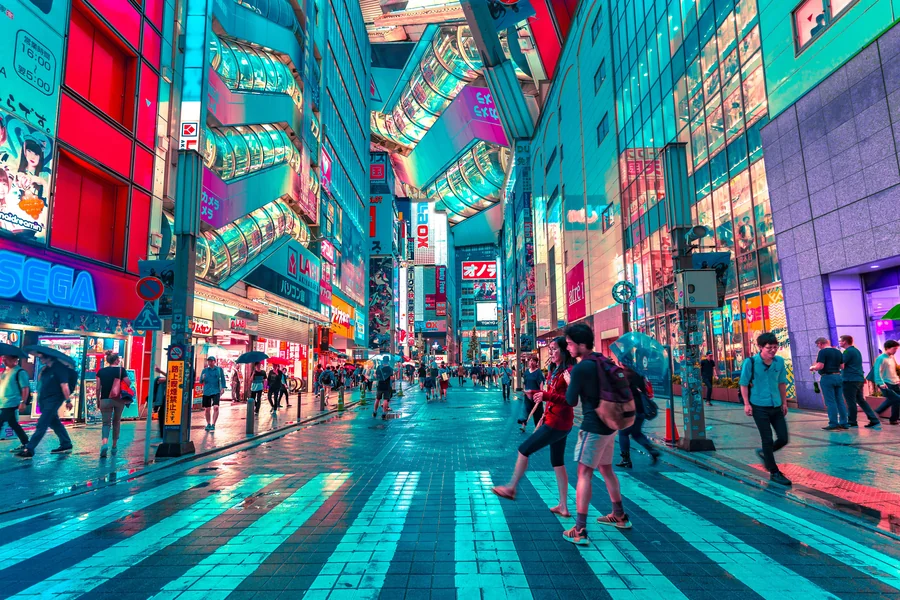
Tokyo has a reputation for overwhelming first-time visitors. Neon signs stacked ten floors high, trains running with surgical precision, and vending machines selling everything from hot coffee to neckties. If this is your first time in Tokyo, the biggest mistake isn’t missing a famous landmark. It’s trying to see everything.
Tokyo reveals a different side when you look beyond guidebooks and talk to people who actually live there. The conclusion is surprisingly consistent: the city rewards curiosity, not speed. This article isn’t meant as a checklist. It’s a practical Tokyo travel guide built around balance, combining iconic sights with lived-in neighborhoods and experiences that still feel special long after the jet lag fades.
If you’re wondering what to see in Tokyo without burning out by day three, start here.
Tokyo Sightseeing Classics (That Are Actually Worth It)
Some places are famous because they photograph well. Others are famous because they deliver. Tokyo has a few that manage both.
Shibuya Crossing is chaotic in a strangely elegant way. Hundreds, sometimes thousands, of people cross at once, yet nobody bumps into each other. It’s urban choreography. Walk it once, then watch it from above. The nearby cafés offer a better perspective than standing in the middle with your phone raised like everyone else.
For contrast, head to Sensoji Temple in Asakusa. Founded in 645, it’s Tokyo’s oldest temple and still very much alive. Yes, Nakamise Street is touristy, but the food stalls are rooted in tradition. Early morning visits feel completely different from the midday rush. Quieter, more reflective, and easier to appreciate.
Tokyo Tower often gets dismissed as “old,” but that’s part of its charm. Built as a symbol of post-war recovery, it’s less flashy than newer observation decks and more nostalgic. If heights don’t bother you, it’s a gentler introduction than the Skytree.
Then there are the Imperial Palace East Gardens. Free, central, and surprisingly calming. They work well as a reset button when Tokyo’s pace starts to feel relentless.
Takeaway: These landmarks anchor your trip, but timing matters more than ticking boxes.
Modern Tokyo: When the City Goes Full Future
Tokyo’s modern side isn’t just glass and steel. It’s immersive, playful, and sometimes deliberately disorienting.
teamLab Planets is one of those experiences that sounds abstract until you’re walking barefoot through water with digital koi swimming around your legs. It’s popular for a reason. Book ahead or don’t bother trying. Same-day tickets are rarely available.
If you want a broader sense of how modern Tokyo fits together—neighborhoods, transport, cultural layers—this is a good moment to slow down and plan the rest of your route. A clear overview can save hours of backtracking later.
Tip: check a solid breakdown of routes and pacing for newcomers here.
Bottom line: Tokyo’s futuristic side is best enjoyed selectively. One standout experience beats three rushed ones.
Neighborhoods That Show How Tokyo Actually Lives
If you want to understand what to see in Tokyo beyond landmarks, neighborhoods are where things start to click.
In Golden Gai, nightlife shrinks into narrow alleys and bars with six seats. Conversations start awkwardly and end with shared drinks and broken English. Some bars still cater to regulars only. Don’t argue; just move on. There’s always another door.
For a completely different rhythm, Shimokitazawa feels almost anti-Tokyo. Vintage shops, indie cafés, and record stores. You can spend half a day wandering without a plan and still feel productive doing absolutely nothing.
Food-wise, skip the myth that Tsukiji “closed.” The Tsukiji Outer Market is very much alive. Grab a skewer, sit on a plastic stool, and eat standing up. It’s informal, fast, and some of the best seafood you’ll try all trip.
Main point: Tokyo starts to make sense when you stop bouncing between attractions and start staying put.
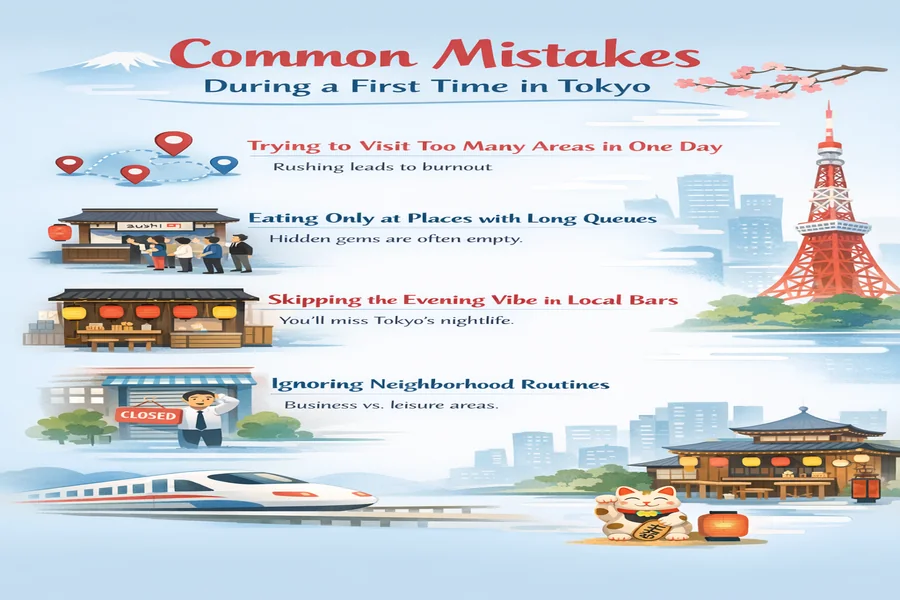
Common Mistakes during a first time in Tokyo, Source: GPT
Weird, Wonderful, and Unapologetically Tokyo
Animal cafés, character cafés, hyper-themed karaoke rooms. Tokyo leans into its quirks.
A sushi-making class might sound gimmicky, but learning why rice temperature matters or how wasabi is actually used adds context you’ll notice in every meal afterward. Karaoke, on the other hand, is pure release. Private rooms, no judgment, and song lists that range from 80s power ballads to anime themes you didn’t know you knew.
These experiences aren’t mandatory, but they’re memorable. And memories, not photos, are what linger.
Takeaway: Tokyo’s strangest ideas often become the stories you tell most.
Final Thoughts: A Smarter Way to Do Tokyo
Tokyo isn’t a city you conquer. It’s one you negotiate with.
The most common regret from first-time visitors is trying to squeeze too much into too little time. The best trips are built around one or two neighborhoods per day, with room to wander, eat slowly, and follow small curiosities.
Yes, see the highlights. They’re highlights for a reason. But leave space for detours. The ramen shop you didn’t plan, the bar you only found because it was raining, the park bench where you finally sit down and just watch the city move.
That’s when Tokyo stops feeling overwhelming and starts feeling addictive.
