
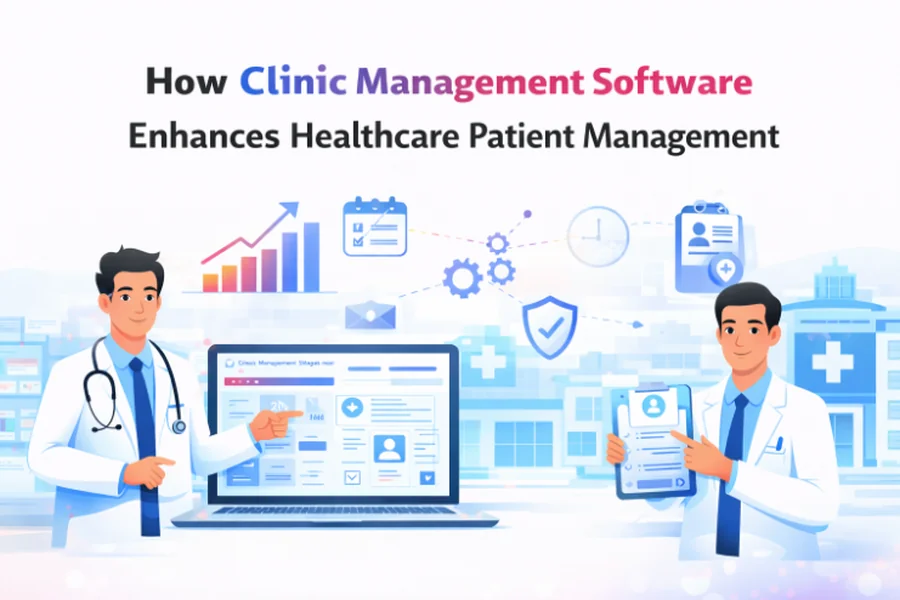
In the contemporary healthcare system, Clinic Management Software is relevant in enhancing the management of patients. It assists the clinics and hospital staff in managing patient registration, appointments, and treatment records at a central location. Through modern technology, medical practitioners will be able to retrieve precise details about patients within a short time and make improved decisions. The software also minimizes paper work, enhances communication and streamlines the workflow within the healthcare facilities. Consequently, medical practitioners are able to offer more effective, quick and streamlined patient care.
Importance of Patient Management in Modern Healthcare
Patient Management is an important aspect that enhances the quality and efficiency of the current healthcare services. Hospitals and clinics receive a great number of patients daily, and it is necessary to arrange patient data, appointments, treatment, and medical history in an appropriate manner. Effective Patient Management will make sure that the professionals in the health care services can easily retrieve the correct information and this will assist them in making improved medical decisions and also providing effective care.
Clinics can make life easier with the assistance of Clinic Management Software by eliminating the paperwork. This technology will enable the staff to handle patient recordings, appointments, treatments, and billing activities within a central system. With the further integration of digital solutions by the healthcare facilities, Digital Clinic Software is gaining significance as a tool to enhance efficiency in the operations.
In most areas and notably with the increasing use of the Clinic Management System in India, healthcare providers are turning to digitization in order to handle patient details better. They assist in minimizing administrative mistakes, enhancing communication between patients and medics and enhancing patient experience, in general. Clinics can provide more structured, quality, and patient-centered healthcare services by introducing modern digital solutions.
Key Features of Clinic Management Software
To simplify the daily running of the clinics and enhance the overall treatment of the patients, Cloud-Based Clinic Management Software is introduced to modern clinics more and more. A Patient Management Solution is one of the most significant features and it assists healthcare providers to store, update and retrieve patient records within a short time span. This system becomes organized and efficient and makes sure that patient information is precise and available all the time.
The other feature is the EMR Management System that enables clinics to have digital medical records. It also assists the doctor in monitoring the past, diagnosis, and treatment of the patients in a systematic manner. Production and management of prescriptions is also made easier by the Prescription Management System and it saves time and errors committed by health practitioners.
Such tools as a Clinic Billing Solution and Automated Invoice Generation make financial operations easier. The features allow the clinics to control billing procedures, keep proper financial accounting records, and ease manual labor. Moreover, Inventory Management Solution allows monitoring medical supplies, medicines, and equipment, where clinics will never lack the necessary goods. kaiyo
To enhance patient interaction, Automated Appointment Reminders, Online Consultation, and a Patient Portal are some of the features that enable the patient to schedule a visit, get reminders, and have a distance consultation with a doctor. This makes it more convenient to both the patients and the clinic members.
Lastly, Security Management is an important factor in the safeguarding of sensitive patient data. Effective security controls allow the healthcare information to be secure without the violation of the healthcare data regulations.
Digital Patient Records and Data Management
Electronic patient records have taken the center stage in the current health care practices. Clinics can use Clinic Management System to store and use patient-related information in a well-organized digital form. This contains medical history, diagnosis, prescriptions, lab report, and treatment plans. Digital records are also beneficial in ensuring that healthcare providers retrieve patient information fast thereby enhancing the quality and speed of concluding medical care.
Clinics will be able to save time on writing papers and the chances of misplacing valuable documents will be avoided through the use of Digital Clinic Software. All the information about patients is kept in a safe place within a single platform and it is therefore easy to update or access information as required by the authorized staff. This framework makes healthcare providers keep clean and complete medical records.
A web-based clinic administration system also helps in improving data management since the doctors and other clinic personnel can obtain patient data at various places. This is particularly helpful with managing clinics and offering distance consultations. It also enhances information flow among medical practitioners since all people are using the latest data.
All in all, the digital patient records assist the clinics in being more efficient, and assist in improving patient care and healthcare administration.
Appointment Scheduling and Queue Management
Appointment and queue control are necessary to provide structured and time efficient healthcare services. Clinics and hospitals have many patients every day and unless there is a good system to manage the appointments then there is the chance that the process may become chaotic and time consuming. An organized digital strategy can be used to minimize waiting time and enhance the patient experience in general.
Using Cloud-Based Clinic Management Software, clinics can schedule, update and manage patient appointments in real time. Such a system enables employees to see the time slots they have, make appointments fast and prevent time conflicts. It is also advantageous to the patients because they can now schedule appointments much easier and communicate better with the clinic.
Clinic Workflow Automation additionally enhances appointment and queue management whereby the flow of patients is automated. It aids in prioritizing appointments, waiting lists, and informing patients of their visits. This automation will help to minimize the manual labor of the clinic employees and make sure that the visits of patients are carried out effectively.
Moreover, the systems facilitate enhanced communication among doctors, nurses, and administrative groups which is significant towards effective management of the hospital. With the help of digital scheduling and queue management systems, healthcare institutions will be able to maximize their efficiency and provide patients with prompt and properly arranged care.
Conclusion
To sum up, Clinic Management Software is essential in enhancing healthcare patient management as it coordinates the patient records, appointments and day-to-day clinic working within one system. It assists the medical professional to cut down on the manual labor, enhance precision, and provide quicker services. With the help of cutting-edge digital solutions, the clinic and hospital can also handle patient data more effectively and improve the level of communication and care quality. With the advancing technology, clinic management systems will still be invaluable in offering patient centered and well-organized healthcare services.

Pretty nice post. I just stumbled upon your weblog and wished to say that I’ve really enjoyed browsing your blog posts. After all I’ll be subscribing to your rss feed and I hope you write again soon!