
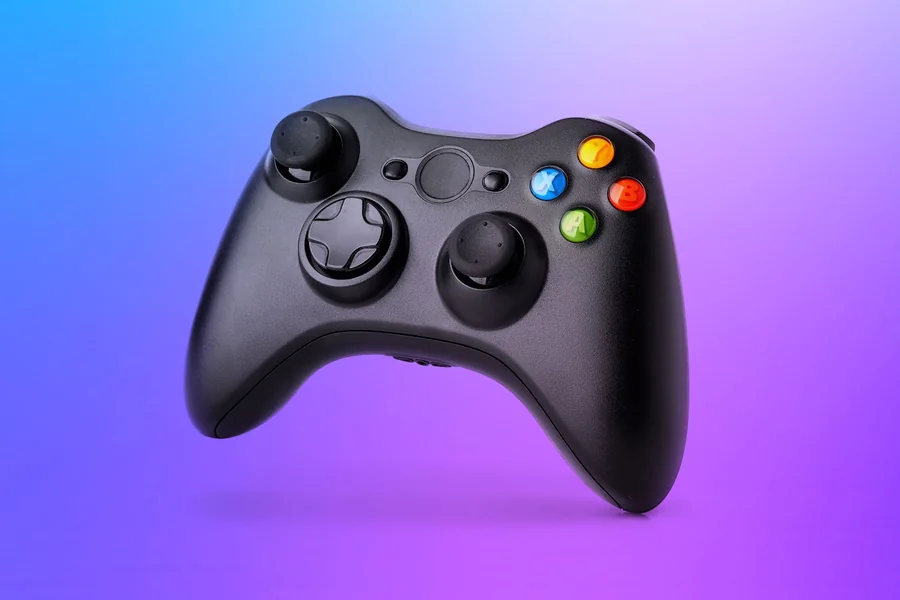
My nephew represents where the entire gaming industry is headed, whether the old guard likes it or not.. He started a round of Fast Fielder on his PlayStation, paused it, grabbed his phone to finish a daily challenge on odds 96 app during his bus ride to work, and later that evening picked up right where he left off on his PC — all without blinking. For him, this wasn’t impressive.
Players Have Already Voted With Their Thumbs
Here’s the stat that should keep every platform-exclusive evangelist up at night: 79% of gamers now use mobile devices, with 55% of those also playing on consoles and 42% on PC. That’s not a niche behavior. That’s a tectonic shift. The idea that a player “belongs” to PlayStation or Nintendo or PC gaming the way they once did is evaporating faster than a puddle in July.
And it goes deeper than that. Around 72% of the global gaming population actively plays across two or more platforms, with a dedicated 13 to 15 percent qualifying as tri-platform gamers who bounce regularly between mobile, PC, and console. These tri-platform players aren’t casual dabblers, either. They invest significantly more time and money in gaming than anyone locked into a single device. They’re the whales, the engaged community members, the players every developer dreams about — and they want their games everywhere.
Generation Z is leading this charge with particular enthusiasm. About 69% of Gen Z gamers play on mobile, 42% on PC, and 38% on console, showing a fluid device-switching behavior that treats platform loyalty as something quaint, like rewinding a VHS tape. They grew up with Fortnite and Genshin Impact and Roblox, games that taught them from the very beginning that their progress, their skins, their friendships should follow them wherever they go.
The Exclusive Is Dying — And That’s Actually a Good Thing
Let me say something that might ruffle some feathers: the era of the platform exclusive as a dominant business strategy is winding down, and the gaming world will be better for it.
Look at what’s happening right now. Sony, the company that built an empire on must-have exclusives like God of War and Spider-Man, has been porting its crown jewels to PC at an accelerating pace. Marvel’s Spider-Man 2 held its PlayStation exclusive status for barely fifteen months before swinging onto Steam. Helldivers 2 launched simultaneously on PS5 and PC. Even Square Enix, which once made Final Fantasy practically synonymous with PlayStation, has publicly committed to a multiplatform strategy, moving titles like Final Fantasy 7 Remake to Xbox and beyond.
Microsoft, of course, went even further. Xbox Game Pass reached 37 million subscribers by early 2025, built entirely around the idea that you should be able to play your games on Xbox, PC, or streamed to your phone. They stopped fighting for exclusive territory and started fighting for subscribers, which is a fundamentally different — and arguably smarter — war.
Nintendo remains the fascinating outlier. You won’t see Mario or Zelda on PlayStation anytime soon, and Nintendo’s strategy continues to work because their hardware and software are so deeply intertwined that the experience is the platform. But even Nintendo feels the pressure. The Switch’s hybrid design — home console and portable in one — was itself an acknowledgment that players don’t want to be tied to the living room couch.
The truth is that exclusives made sense when gaming was a hardware-driven industry. You bought the box, and the box’s games justified the purchase. But in a world where 3.5 billion people play games and mobile alone generates over $100 billion annually, locking your content behind a single device means voluntarily shrinking your audience. Rising development costs make that math even harder to justify. When a AAA title costs hundreds of millions to produce, the financial logic of keeping it on one platform starts to crumble.
How Developers Are Adapting — And Thriving
Here’s the optimistic part: the developers who have embraced cross-platform aren’t just surviving. They’re thriving in ways that should make every studio sit up and pay attention.
Fortnite maintains over 30 million daily active users across all platforms. Genshin Impact built a multi-billion-dollar empire by letting players seamlessly move between PC, PlayStation, Xbox, and mobile with full cross-save and cross-play. Where Winds Meet, a Wuxia open-world RPG, attracted 9 million players within two weeks of its global expansion across PC and console, with a mobile launch planned to complete the trifecta.
The data supports what these success stories illustrate. Games offering cross-progression and cloud saves show 45% higher engagement retention within the first 30 days compared to single-platform titles. Cross-platform players return 31% more often daily than their single-platform counterparts. And the cross-play services market itself is projected to grow from about $1.6 billion in 2024 to over $8 billion by 2033.
Development engines have evolved to make this transition smoother than ever. Unity and Unreal Engine increasingly support what developers call a “mobile-as-primary” design philosophy — a complete reversal from just five years ago, when mobile was an afterthought bolted onto the “real” version. Cloud gaming platforms, which lead with 95% cross-play support, are abstracting hardware differences entirely, making the question of which device you own less important than whether you have a decent internet connection.
Google Play recently expanded Google Play Games to PC, creating a unified distribution channel for Android and Windows. Valve is pushing SteamOS across PCs, the Steam Deck, and the upcoming Steam Frame. Distribution platforms themselves are converging to support seamless cross-platform rollouts because they understand the direction of the wind.
What This Means for You and Me
I think there’s something genuinely wonderful about where gaming is headed. For decades, the industry was defined by walls — PlayStation vs. Xbox, console vs. PC, “real gamers” vs. mobile players. Those walls created communities, sure, but they also created divisions. Your friend had an Xbox and you had a PlayStation? Too bad. You wanted to play on the bus what you played at home? Dream on.
Those barriers are falling. A parent can play a few minutes of their favorite RPG on their phone during a lunch break and pick it up on the big screen after the kids go to bed. Friends scattered across different consoles can squad up without anyone needing to buy new hardware. A kid in Lagos and a kid in London can team up in the same world, one on a phone and the other on a gaming PC, and neither one notices the difference.
The gaming population hit 3.5 billion in 2025, growing almost 5% year over year, and cross-platform access is a significant driver of that expansion. When you remove the barrier of “you need this specific box,” you open the door to everyone.
The Future Is Fluid
Not every platform holder will navigate this transition gracefully. Sony’s corporate reports have sent mixed signals — prioritizing hardware metrics one quarter, hiring multiplatform managers the next. Nintendo will continue charting its own course, betting that magical software experiences tied to unique hardware can resist the gravitational pull of everywhere-gaming. Some studios will cling to exclusivity deals because the upfront checks are too tempting to refuse.
But the trend line is unmistakable. Players have spoken, loudly and with their wallets. They want their games on every screen they own. They want their progress to follow them like a shadow. They want to play with their friends regardless of who made whose box.
The cross-play services market is surging. Cloud gaming is growing at nearly 46% annually. The most successful games of the past five years — Fortnite, Genshin Impact, Roblox, Minecraft — all share one common trait: they meet players wherever they are.
My nephew doesn’t think of himself as a “PlayStation gamer” or a “mobile gamer” or a “PC gamer.” He’s just a gamer. And in a few years, that distinction won’t just feel outdated — it’ll feel impossible to explain.
The platforms that understand this will flourish. The ones that don’t? Well, there’s a reason the headline says “or die.”
