
Acne has been a skin concern that disturbs everyone’s day to day life by simply just existing. It is not just a single type. Acne brings in redness, inflammation, clogged pores and what not. Blackheads and whiteheads also occur a lot. Dealing with acne breakouts become so tiring after some time.
It has been so confusing how to deal with it. Chemical ingredients are a way but people are looking towards natural alternatives as well. Tea tree oil for acne control is one popular approach. It has been used for dealing with acne popularly.
A gel formulation for acne control proves to be more effective because of its lightweight and better absorption properties. Now selecting ingredients for an acne gel becomes a choice.
There are chemical gels with ingredients like salicylic acid, benzoyl peroxide, niacinamide which have been used widely. If we focus on clean beauty trends then tea tree oil has been in demand for such purposes.
Tea tree oil as an anti acne agent
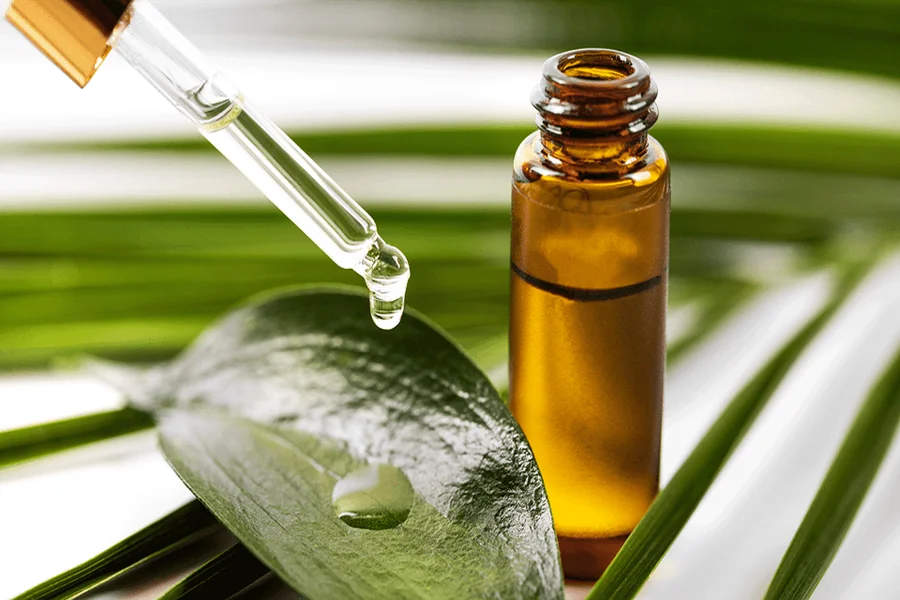
Tea tree oil is an extracted oil which is derived from the leaves of melaleuca alternifolia. It has been a potent skincare ingredient from ages. The chemical constituents of tea tree oil like terpenes which are the performing agents. They have great antimicrobial and anti-inflammatory action. For people with acne concerns like mild or moderate breakouts a diluted tea tree oil like up to 5% can be used for reducing inflammatory or non inflammatory lesions with continued use.
The role of tea tree oil
- Tea tree oil contains terpinen-4-ol which works by destructing the cell wall of acne causing bacteria.
- It works by reducing the inflammation and redness on the skin due to pimples.
- Tea tree oil regulates the sebum production which helps in reducing the chances of acne.
- It is better suited for sensitive skin because it is not so drying on the skin and does not cause skin flakiness.
Tea tree oil is a good ingredient but has a slower approach. It does not have a fast action in dealing with acne reduction. The right concentration of tea tree oil matters a lot otherwise it can cause skin irritation. Diluted tea tree oil with up to 5% concentration is advised. More concentration would be skin irritating.
Chemical gels for acne
Chemical gels like salicylic acid, benzoyl peroxide, niacinamide have been actively used for dealing with acne because of their mechanisms against acne. They have a targeted approach for acne control.
- Salicylic acid: It is the gold standard ingredient for acne care as it penetrates deep into the skin and delivers as it is a beta hydroxy acid which is oil-soluble. It goes into the pores and clears out the oil and dissolves dead skin cell bonds, clearing them which reduces the acne due to clogged pores. Only 2% of salicylic acid is advised to be used in an acne control treatment.
- Benzoyl peroxide: It is the most recommended over the counter agent for acne clearance. It works by killing the acne causing bacteria. It helps in declogging the pores as well. It is the most efficient ingredient for dealing with red, swollen acne that causes inflammation. A concentration of 2.5-5% is ideal to be used in acne control.
- Niacinamide: It is an alpha hydroxy acid which works by performing a surface cleansing action. This is a water soluble exfoliant that clears the surface concerns that cause acne. It also has anti-inflammatory action. It helps in dealing with inflamed acne.
What makes chemical gels useful?
- They have a fast action, it gives visible results in 2-4 weeks.
- Instead of an overall approach chemical gels have a targeted action for acne. They directly work on the acne concerns.
Chemical gels are quite adapted to give results but it can cause skin irritation. It can cause skin dryness, itching or more. In the beginning suitability matters but it may not be suitable to some people. It can also affect the barrier repair function.
What to use tea tree oil or chemical gels
The approach that you want to choose depends on what your skin needs and how much patience you have to deal with acne.
- If you have mild or hormonal acne and your skin is sensitive you can opt for tea tree oil based gel which is a safer choice and less irritating to the skin.
- If you have acne that is moderate to severe, cystic, or persistent you can go for a chemical gel which reduces acne at deeper levels and provides faster results.
- Many people use a hybrid method by using a chemical active for stubborn or inflamed areas while relying on tea tree oil in cleansers or spot treatments for daily maintenance.
Tips for choosing the approach
- Conduct a patch test first to check suitability for your skin
- Use one product at a time. Don’t mix active ingredients without consultation.
- Give some time for a product to work.
Final Thoughts
Tea tree oil and chemical acne gels are two different approaches suited for different purposes. Tea tree oil has a gentler, more natural approach with a slower action. Chemical activities offer faster and more targeted results. The best clean beauty routine isn’t necessarily the one with the fewest synthetic ingredients. It’s the one that actually gives results for your skin depending upon your concerns and skin suitability.

I found your weblog web site on google and verify a couple of of your early posts. Continue to keep up the excellent operate. I simply further up your RSS feed to my MSN Information Reader. In search of forward to studying extra from you later on!…
Haz?r E-Ticaret Scripti Sat?n Al
ya,im here