

Catching Sky Events Before They Vanish: A Twitter Downloader Workflow for Amateur Astronomers
A meteor shower over the Atacama. A solar prominence caught by a backyard scope in Helsinki. These rare moments land on X and quietly disappear within hours.
A reliable Twitter Downloader belongs in the observing kit, next to the star atlas and the red flashlight. Hobbyist astronomers treat it as preservation infrastructure for sky content.
How sssTwitter works as an X Downloader for live broadcasts
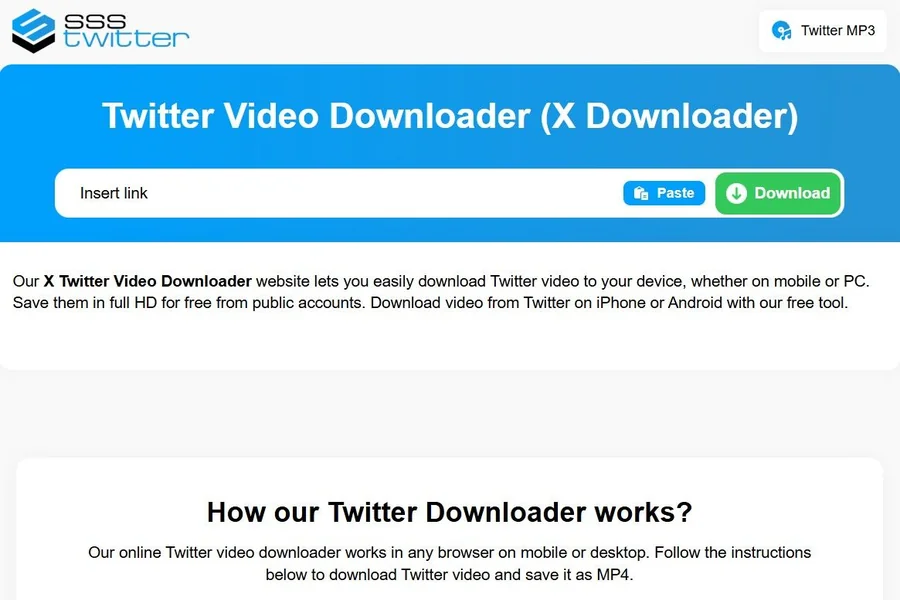
sssTwitter is an independent third-party tool that pulls public posts, video, audio, GIFs, images, and live broadcasts from X. No account or install required.
The new broadcast capture feature reshapes things for sky watchers. Streams from observatories, science communicators, and citizen astronomers used to vanish the moment the host pressed end.
Speed counts. A meteor video posted at 02:14 local time and pulled to a phone before the observer returns to sleep is the realistic bar. sssTwitter sits inside that window.
The capture sequence
- Copy the post URL or live broadcast link from the X app or any browser.
- Paste it into the sssTwitter input field on the homepage.
- Pick a format: MP4 for telescope footage, MP3 for sky-talk narration, GIF for short transit loops.
- If the original broadcast was published in 1080p, sssTwitter lets you download twitter video hd straight to disk.
- Repeat for each segment you want archived offline.
How a Twitter Downloader compares to other capture methods
Observers cycle through a few options before settling on a web tool. Each carries trade-offs that surface fastest during short celestial events.
| Method | Quality ceiling | Cost | Setup |
| Screen recording | Capped, often blurry on motion | Free, OS-bundled | Manual per clip |
| Desktop capture suites | Source quality | Paid subscription | Install plus license keys |
| Browser extensions | Variable per release | Free or freemium | Install plus permissions |
| sssTwitter web tool | HD when source allows | Free, unlimited | None – paste and save |
A web tool sits in the right column for short windows. A 90-second comet brightening clip drops to disk in under twenty seconds on a steady connection.
Formats that fit sky content
- MP4 for video posts and broadcast captures with full motion data
- MP3 for science communicator threads where the talk track is the value
- GIF for short, looping events such as transit shadows or auroral flickers
- JPG or PNG images and photos for static observations and finder charts
Why offline sky archives change how hobbyists study astronomy
Astronomy on X is bursty. A thread on a coronal mass ejection (solar plasma erupting) can vanish when its author goes private. A live broadcast from a dark-sky site ends and is gone.
Offline copies let observers compare a meteor’s apparent trajectory across multiple feeds, frame by frame. They convert one-time streams into study material for the next observing session.
Repurposing widens the value chain. A captured meteor flash becomes a frame in a club presentation. An audio cut from a stellar evolution podcast becomes background for a long drive home.
Working etiquette for archived sky content
The tool reaches public posts only. Private accounts and protected streams stay off-limits. The workflow respects what observers can already view themselves.
Credit the original observer when you share a clip in a club newsletter or forum thread. Personal archives stay personal; redistribution decisions belong to the creator.
sssTwitter runs in any browser on iPhone, Android, tablet, or desktop. The same paste-and-save flow holds at a star party laptop or the back of a van under dark skies.
