
Introduction
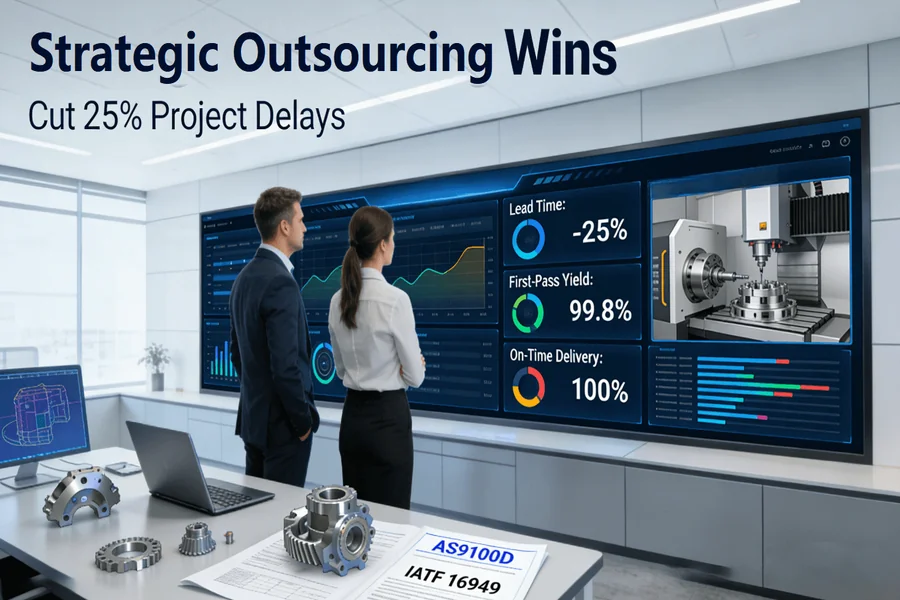
In the wave of industrial transformation, hardware startups and OEMs frequently face persistent challenges: long prototyping lead times and inconsistent part quality. These issues directly cause new product introduction (NPI) schedules to slip, jeopardizing market opportunities and eroding competitive advantage. The root of these delays is often a fundamental misunderstanding of what constitutes true strategic outsourcing.
Many companies make sourcing decisions based primarily on unit price, overlooking the critical underlying capabilities of a partner in tech-driven manufacturing. This myopic approach fails to account for the engineering depth, process controls, and quality systems that are essential for reliable production. This article provides a systematic CNC turning guide designed to help decision-makers identify long-term partners who can guarantee component precision and enhance overall supply chain agility.
Why is Component Precision the Foundation of Industrial Transformation?
Component precision is the bedrock upon which successful industrial transformation is built. In high-stakes industries like aerospace, medical devices, and robotics, a single out-of-spec part can cause system-wide failure, safety incidents, or costly recalls. Achieving consistent, micron-level precision requires more than just advanced machines; it demands a culture of engineering excellence. This encompasses rigorous process design, meticulous inspection, and a systemic approach to eliminating variation, ensuring that every part performs exactly as intended in the final assembly. Manufacturers that institutionalize this excellence, through its ISO 9001 framework, transform precision from an aspiration into a predictable, repeatable outcome for every custom CNC turning part.
1. The Systemic Cost of Dimensional Variability
Dimensional inconsistency is a silent profit drain. When parts do not fit perfectly, they cause assembly line stoppages, require manual fitting, or lead to field failures. Engineering excellence in manufacturing focuses on eliminating this variability at the source. By holding tight tolerances (often to ±0.005mm or finer) and ensuring perfect concentricity and surface finish, a high-caliber manufacturer ensures that components are truly interchangeable. This reliability streamlines downstream assembly, reduces labor costs, and prevents the cascading expenses of warranty claims and brand damage, directly supporting the financial goals of industrial transformation.
2. Enabling Advanced System Performance and Miniaturization
Modern technological advancement, especially in sectors like medtech and micro-robotics, is pushing the limits of miniaturization and functional integration. This evolution is entirely dependent on component precision. A medical implant must have a flawless, biocompatible surface; a drone’s harmonic drive must have gear teeth cut with sub-micron accuracy to minimize noise and vibration. Without suppliers capable of this level of precision, product innovation stalls. Therefore, selecting a partner for custom CNC turning parts based on their proven ability to deliver such precision is not a procurement decision; it is a strategic R&D investment.
3. Building Trust Through Certified Process Control
Precision cannot be verified by inspection alone; it must be built into the process. This is where formal quality management systems become critical. A manufacturer operating under a certified ISO 9001 system doesn’t just check parts at the end; it controls and documents every variable — from material certification and tool calibration to machining parameters and environmental conditions. This process-centric approach, as exemplified by certified partners, provides objective, auditable evidence that component precision is the result of a controlled system, not luck. This builds the trust necessary for long-term, strategic partnerships in transformative industries.
How Do Advanced Machining Trends Influence Strategic Outsourcing Decisions?
Advanced machining trends are fundamentally reshaping the landscape of strategic outsourcing. Technologies like multi-tasking turn-mill centers, 5-axis turning, and integrated in-process metrology are no longer niche capabilities but essential tools for producing complex, high-value components. These advancements make CNC turning for custom parts more efficient, accurate, and versatile. When evaluating potential partners, tech leaders must look beyond basic lathes and assess a supplier’s adoption of these trends. A partner at the forefront of technology can consolidate operations, reduce setups, and improve quality, which directly translates to shorter lead times, lower total cost, and greater design freedom for the client. Understanding these capabilities is crucial for making an informed strategic outsourcing decision. Engineers evaluating technical feasibility often refer to in-depth resources, such as a comprehensive guide on CNC turning services, to understand each critical step from geometry to finished part.
- The Rise of Multi-Tasking and Turn-Mill Centers: The most significant trend is the shift from standalone lathes to multi-tasking machining centers. These machines combine turning, milling, drilling, and threading operations in a single setup. For a complex part like a valve body or a transmission component, this means the entire part can be completed on one machine. This eliminates the errors introduced by multiple setups, drastically reduces handling and queue time, and ensures all features are perfectly aligned to a single datum. Outsourcing to a partner with this capability is a direct strategy to compress project timelines and enhance supply chain agility.
- Integrated Metrology and Closed-Loop Machining: Another key trend is the integration of inspection into the machining process itself. On-machine probes and laser tools can measure critical dimensions between operations. This data is fed back to the machine control in real-time to automatically compensate for tool wear or thermal drift, a practice known as closed-loop machining. This trend moves quality assurance from a post-process checkpoint to an in-process correction, ensuring that precision is maintained throughout the production run. A manufacturing partner utilizing this technology provides a higher assurance of consistent quality, which is a critical factor in strategic outsourcing for mission-critical components.
- Digital Thread and Manufacturing Execution Systems: Advanced manufacturing is increasingly digital. The digital thread connects the CAD model to the CAM program, to the machine, and to the final inspection report. When combined with a manufacturing execution system (MES), this provides complete visibility into the production process. A partner with this level of digital integration can provide real-time updates on job status, predict potential delays, and ensure full traceability. This transparency and control are invaluable for tech leaders managing complex, global supply chains, making it a decisive criterion in the strategic outsourcing selection process.
What are the Key Selection Criteria to Choose CNC Turning Supplier?
Choosing the right CNC turning supplier is a complex evaluation that must extend far beyond a simple price comparison. The key criteria form a holistic framework assessing technical capability, quality systems, and cultural fit. Essential benchmarks include the possession of industry-specific certifications like IATF 16949 (automotive) or AS9100D (aerospace), which are proxies for a mature management system. Technical depth must be evaluated through design for manufacturability (DFM) collaboration and case studies. Furthermore, the supplier’s scalability, communication protocols, and commitment to standards — such as adhering to the ISO 2768 general tolerancing standard for non-critical features — are all critical indicators of their suitability as a long-term, reliable manufacturing partner.
1. Technical Capability and Collaborative Engineering
The foremost criterion is technical depth. Can the supplier simply machine the part, or can they help optimize it? This is revealed through their DFM feedback process. A superior partner will provide detailed analysis, suggesting design modifications to improve manufacturability, reduce cost, and enhance performance. They should demonstrate proven experience with materials and geometries relevant to your industry. Evaluating their machine portfolio — including multi-axis and Swiss-type lathes for complex or small parts — is essential. The ability to act as a collaborative engineering partner is what separates a true strategic ally from a basic job shop.
2. Quality Management System and Certifications
Certifications are the minimum entry ticket, not the finish line. A supplier should hold at least ISO 9001:2015. For automotive, IATF 16949 is mandatory, emphasizing risk management and continuous improvement. For aerospace, AS9100D is non-negotiable, adding stringent requirements for configuration control and foreign object detection (FOD). Beyond certificates, audit their inspection methodology. What coordinate measuring machines (CMMs) and surface testers do they use? Do they provide first-article inspection reports (FAIR) and material certifications? A robust, living quality system is the only guarantee of consistent component precision.
3. Operational Excellence and Strategic Alignment
Finally, evaluate the supplier’s operational maturity and cultural fit. Do they have the capacity and supply chain resilience to scale with your production from prototype to volume? Assess their project management and communication: is there a dedicated point of contact? Is their quoting and order-tracking process transparent? Furthermore, their approach to standards should align with industry best practices; for instance, applying ISO 2768 general tolerances for non-critical dimensions demonstrates an understanding of cost-effective engineering. The ideal partner’s culture should mirror your own, valuing transparency, precision, and a long-term commitment to mutual success.
How to Maximize Supply Chain Agility Through Tech-Driven Manufacturing?
Supply chain agility — the ability to respond rapidly to design changes, demand fluctuations, and market opportunities — is increasingly powered by tech-driven manufacturing. Digital tools transform traditional, linear supply chains into responsive, networked systems. A forward-thinking CNC machining partner leverages technologies like instant online quoting, cloud-based project management, and IoT-enabled machine monitoring to compress lead times and enhance visibility. This digital infrastructure allows for rapid iteration, real-time status updates, and data-driven forecasting, enabling companies to pivot quickly without sacrificing quality or incurring massive cost penalties.
1. Digital Workflows for Accelerated Prototyping and Ramp-Up
The foundation of agility is speed in the product development phase. Tech-driven manufacturing utilizes fully digital workflows. Engineers can upload a CAD file and receive an instant quote and automated DFM analysis within hours, not days. Once approved, the digital model is directly converted into machine code, and production can be scheduled on on-demand capacity. This eliminates weeks of administrative lag, allowing for faster design validation and a more responsive new product introduction (NPI) process. The ability to go from digital design to physical part in days is a core component of modern supply chain agility.
2. Real-Time Data and Predictive Insights
Agility requires information. Modern CNC shops equipped with Industrial IoT sensors collect vast amounts of data from their machines — spindle load, temperature, cycle times. This data, analyzed in a manufacturing execution system (MES), provides real-time visibility into production status and machine health. It enables predictive maintenance, preventing unplanned downtime, and allows for dynamic rescheduling based on actual shop floor conditions. For a client, this means reliable, predictable deliveries and the ability to receive accurate updates on their order status at any moment, reducing uncertainty and planning friction.
3. Flexible Capacity and Scalable Operations
True agility is the ability to scale production up or down efficiently. A CNC machining partner built on tech-driven principles often maintains a blend of in-house capacity and a vetted partner network, managed through a unified digital platform. This model provides flexible, scalable capacity without the client needing to manage multiple suppliers. Whether you need 10 prototype units or 10,000 production parts, the digital system can allocate the work optimally across the network, ensuring consistent quality and lead times regardless of order volume. This elastic model is the operational backbone of a resilient and agile supply chain.
Why Should Tech Teams Rely on a Certified CNC Turning Part Manufacturer?
Tech teams should rely on a certified CNC turning part manufacturer because certifications are an objective, auditable proxy for reduced risk and guaranteed process integrity. In regulated industries, certifications like AS9100D (aerospace) and IATF 16949 (automotive) are not optional; they are the codified systems that ensure safety, traceability, and consistent quality. A manufacturer, which holds these credentials, demonstrates that it has the management systems, technical controls, and cultural discipline to produce custom CNC turning parts that meet the most stringent requirements. This level of assurance protects the tech team from compliance failures, production delays, and the reputational damage associated with part failures, making the certified partner a strategic asset, not just a vendor.
1. AS9100D and IATF 16949: Beyond Quality to Risk Management
Certifications like AS9100D and IATF 16949 go far beyond basic quality checks. They are comprehensive risk management systems. AS9100D, for instance, mandates rigorous supplier oversight, configuration management (ensuring the correct revision of a design is always used), and procedures for preventing foreign object debris (FOD). IATF 16949 emphasizes statistical process control (SPC) and proactive defect prevention. By partnering with a manufacturer certified to these standards, tech teams effectively outsource a significant portion of their supply chain risk management, gaining confidence that every potential failure mode has been systematically considered and controlled.
2. Ensuring Full Traceability and Material Integrity
For components in life-critical or high-value applications, full traceability is non-negotiable. Certified manufacturers are required to maintain a chain of custody for all materials. Each billet of aluminum or titanium comes with a mill certificate detailing its chemical composition and mechanical properties. This certificate follows the material through every step of production. In the event of an issue, this allows for precise, targeted recalls rather than costly, blanket actions. This level of control, mandated by certification, provides tech teams with an immutable audit trail, which is crucial for regulatory submissions and quality audits.
3. The Cultural Discipline of Continuous Improvement
Perhaps the most valuable aspect of a certified partner is the embedded culture of continuous improvement. Certification standards require regular internal audits, management reviews, and documented corrective and preventive action (CAPA) processes. This means the manufacturer is not static; it is in a constant cycle of measuring performance, identifying root causes of issues, and implementing improvements. For a tech team, this translates into a partner that becomes more reliable, efficient, and cost-effective over time. Ultimately, transforming a complex engineering blueprint into a physical product depends on choosing a CNC turning part manufacturer with this high level of technical transparency and systemic discipline to maintain zero-defect standards even at production scale.
What Are the Long-Term Benefits of Engineering Excellence in Manufacturing?
The long-term benefits of engineering excellence in manufacturing are profound, impacting every aspect of a product’s total cost of ownership and a company’s market position. It extends far beyond the initial unit price to encompass dramatically reduced scrap and rework, lower warranty costs, enhanced brand reputation, and faster time-to-market for future iterations. A culture of excellence, as detailed in a high-quality CNC turning manufacturing guide, fosters innovation by making the production of complex, high-performance designs predictable and economical. This foundational capability is a strategic moat that enables sustained growth and competitive advantage in an era defined by industrial transformation.
1. Dramatic Reduction in Total Cost of Ownership (TCO)
The most direct financial benefit is a lower total cost of ownership. Engineering excellence ensures parts are right the first time, minimizing scrap rates. It also produces components that fit perfectly, reducing assembly time and eliminating the need for costly rework or sorting. Furthermore, precisely machined parts wear more evenly and predictably, leading to longer product life and lower maintenance costs for the end-user. While the initial price from an excellent manufacturer may be higher, the compounded savings across the product lifecycle — from procurement to assembly to service — are typically 30% or more, as industry analyses have shown.
2. Accelerated Innovation and Design Iteration
Engineering excellence enables speed. When a tech team has confidence in their manufacturing partner’s ability to accurately produce complex designs, they can innovate more aggressively. They can design lighter, stronger, and more integrated components without fear of manufacturability issues derailing the project. The partner’s expert DFM feedback further accelerates this process by identifying potential problems early. This symbiotic relationship compresses development cycles, allowing companies to bring superior products to market faster and iterate more rapidly in response to competition — a critical capability highlighted in analyses of global Industry 4.0 trends.
3. Building a Foundation for Sustainable Growth and Partnership
Finally, engineering excellence builds intangible but invaluable assets: trust and strategic partnership. Consistently delivering high-quality, reliable parts on schedule makes a manufacturer an indispensable extension of the client’s own operations. This trust allows for deeper collaboration on future projects, joint process development, and long-term capacity planning. It transforms a transactional supplier relationship into a strategic alliance that can navigate market fluctuations, technological shifts, and scaling challenges together. This resilient partnership is perhaps the ultimate long-term benefit, providing a stable foundation for sustainable growth in a volatile global marketplace.
Conclusion
Successful industrial transformation requires a fundamental shift from transactional purchasing to capability-based strategic outsourcing. This means moving beyond the lowest bid to partner with manufacturers whose core competency is component precision and engineering excellence. By selecting reliable manufacturing partners with robust certifications like IATF 16949 and AS9100D, companies can effectively mitigate supply chain risk, dramatically shorten product development cycles, and ensure their innovations are realized with uncompromising quality. In the race to market, the right manufacturing partnership is not a cost center; it is a critical competitive accelerator.
FAQs
Q: How can I choose CNC manufacturer for high-stakes aerospace components?
A: Prioritize manufacturers with AS9100D certification, the aerospace quality standard. Verify their expertise with exotic alloys and demand full material traceability. A comprehensive evaluation should assess their technical depth and risk management protocols as critically as their machine list.
Q: What defines a truly agile Supply Chain Agility in CNC machining?
A: True agility is defined by rapid DFM feedback and the ability to scale production without losing component precision. A modern partner uses digital workflows to minimize lead times, enabling fast design iteration. This responsiveness is essential for maintaining a competitive edge in shrinking time-to-market windows.
Q: Why is Engineering Excellence more important than the lowest unit price?
A: Focusing solely on price leads to hidden costs from high scrap and assembly failures. Engineering excellence ensures parts are right the first time, reducing the total cost of ownership. Partnering with a certified manufacturer invests in quality assurance and process stability, protecting your brand and ensuring long-term project success.
Q: How do Advanced Machining Trends impact the quality of custom CNC turning parts?
A: Trends like 5-axis simultaneous turning and integrated metrology enable complex geometries and superior surface finishes. These technologies enhance the dimensional stability and performance of custom CNC turning parts. Aligning with a partner utilizing these trends ensures your products leverage the full potential of modern manufacturing science.
Q: What are the primary benefits of Strategic Outsourcing for OEM manufacturers?
A: Strategic outsourcing lets OEMs focus on core innovation while leveraging a partner’s specialized technical assets. It provides access to certified processes without major capital investment, fostering supply chain agility and ensuring production is handled by experts adhering to global engineering excellence standards.
Author Bio
The author is a specialist in precision manufacturing and supply chain strategy for technology-driven industries. Their expertise is applied within the framework of LS Manufacturing, a global manufacturing services partner dedicated to supporting innovation in aerospace, medical, and automotive sectors. The team operates under a certified management system encompassing IATF 16949, AS9100D, ISO 9001, and ISO 14001, ensuring excellence, traceability, and sustainability from prototype through production. For a professional technical consultation on your next high-precision turning project, explore their comprehensive CNC turning solutions and request a detailed project analysis.
