
Entertainment desks do not lose readers because a clip looks soft. They lose them when a seven-second motion sequence invents a detail the biography, still, or caption never supported. A celebrity age card, a concert still, or a career timeline can be accurate as a photo and wrong as soon as the generator adds a trophy, a venue, or a crowd reaction that never happened. That is why a video generator ai is useful only when the desk treats motion as a claim layer, not as decoration poured onto a page.
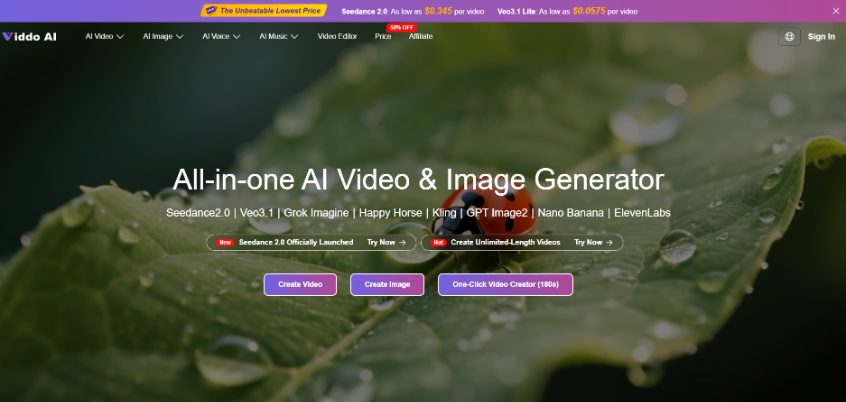
The expensive failure is not a bad render. It is a publishable-looking clip that quietly expands the story. Reviewers argue about taste while the factual error rides into the article. Viddo AI can shorten exploration across models in one workspace, but the desk still needs a kill rule that asks what new claim the motion introduced.
Start From The Fact The Still Is Allowed To Carry
Before anyone opens a model list, write one sentence the still is allowed to communicate. “This photo shows the artist at the 2024 award stage” is a usable brief. “Make it cinematic” is not. The second invitation lets the generator invent props, logos, and reactions that read as reporting once they move.
Entertainment pages often mix biography, event coverage, and light analysis. Motion should serve only the sentence already verified. If the still does not show a trophy in hand, the clip should not manufacture one for drama. If the caption states a year, the background signage should not contradict it. The acceptance test is boring on purpose: remove every invented claim before anyone judges lighting.
Mark Claims That Must Stay Outside The Frame
Ages, net-worth figures, relationship status, and award names usually belong in text, not in generated scenery. When those facts are forced into the picture as floating labels or trophy engravings, the model has more chances to misspell, merge, or invent them. Keep the verified numbers in the article body. Let the clip carry only presence, setting, and restrained movement that the source image already implies.
A practical desk rule is to list three “never generate” items for each package: no fabricated trophies, no invented headlines in the background, and no crowd banners with readable text. The list takes one minute and prevents an afternoon of cleanup after a preview looks exciting in a small player.
Observable fails are usually concrete. A ring finger gains a jewel the still lacked. A stage sign gains a year that conflicts with the caption. A crowd banner shows a brand the event never displayed. Hands and logos look fine in the first preview until the face is warped against the source photo. Any one of those is enough to reject the file before design polishes the crop.
Route Models By What Would Embarrass The Desk
A long model menu becomes wasteful when every request starts with whatever felt new that morning. Entertainment work needs a failure-first route. If identity drift would make the subject look like someone else, consistency matters more than spectacle. If the package is a simple still coming to life for a social card, a cheaper route may be enough. If the page needs clearer physical motion around a stage or product, a stronger motion model may justify a higher floor.
Viddo AI surfaces public price floors that help that routing conversation stay concrete. Seedance 2.0 is listed as low as $0.345 per video, while Veo 3.1 Lite is listed as low as $0.0575 per video. Those numbers are not a quality ranking by themselves. They are a way to stop the desk from spending the expensive lane on a clip that only needed light ambient motion behind a verified caption.
|
Package risk |
What must survive |
Cheaper route is enough when |
Spend up when |
|
Biography card |
Same face, no invented props |
Movement is soft and background stays quiet |
Hair, jewelry, or stage geometry collapses |
|
Event still |
Venue mood without false signage |
Camera drift alone carries energy |
Hands, mics, or logos warp under motion |
|
Explain short |
One true action the still already implies |
No readable text is required in-frame |
The story depends on a precise gesture |
Use the table in the intake note, not after five rejected exports. The point is to choose the lane before credits scatter across curiosity clicks. When a desk burns four expensive renders only to discover the caption never authorized a trophy, the team has wasted an hour arguing about a claim that should have been blocked at intake, then sent back to rewrite the package before publish.
Keep One Rejection Signal Visible To Every Editor
Replace “looks premium” with a binary check another editor can apply without joining the generation chat. Strong signals include “the face remains the same person at second three,” “no trophy or banner appears that the still lacked,” and “the final crop still leaves room for the real headline.” If a clip fails one signal, it returns to draft even when the lighting looks richer than the source photo.
That rule also protects junior editors. They should not have to defend taste against a senior who likes drama. They only need to show which invented claim entered the frame.
Run A Two-Pass Review Before The CMS
Pass one is factual. Compare the export to the approved still and the one-sentence claim. Discard anything that adds objects, text, people, or outcomes the source did not contain. Pass two is packaging. Place the survivor in the real article crop and social crop, then check whether captions, bylines, and timestamps still read cleanly beside the motion.
The ordinary creation path on Viddo AI supports that discipline without turning the desk into a lab: select a model, enter a prompt or upload media, set the needed ratio and length, then generate and review. Entertainment teams should pick only the settings required by the slot. A homepage card rarely needs every available ratio experiment.
When a package needs more than one clip, keep the same approved still as the parent reference and change one instruction at a time. Otherwise nobody can tell whether a better result came from the model, the prompt, or a softer fact check.
A common discard sample looks like this: the still shows an artist holding a microphone, the prompt asks for “celebration energy,” and the export invented a new trophy that never appears in the source. The motion may be smooth around second three. The page still could not publish it, because the award becomes a biography claim the desk did not verify. That single discard should happen immediately rather than asking for a “less shiny” version of the same invented object.
Build A Weekly Slot Budget Instead Of Open Curiosity
Entertainment calendars refill every day. Without a slot budget, editors regenerate whenever a rival page looks more dynamic. A practical week might allow one biography package, one event still, and one light explainer. Each slot gets a fixed number of generation attempts after the claim sentence is written. When the attempts end, the desk either publishes a cleared clip or keeps the still.
That budget also clarifies when to use Viddo AI for exploration versus when to stop. Exploration can happen inside the attempt limit. Publication cannot wait for a perfect cinematic accident. Readers arrive for the fact package; motion is optional support.
If a slot repeatedly fails because the still is too crowded, repair the source before buying another model route. Crowded stills create invented props under motion more often than clean portraits do. The repair is editorial, not technical.
Archive The Exact File That Cleared Both Passes
Prompts are not proof. Archive the approved export with the still, the claim sentence, and the rejection signal that it passed. Later updates to a celebrity page often reopen old media folders. A prompt alone cannot show what readers actually saw when the article first ranked.
On the publish sheet, each video generator ai export should be tied to the sentence it is allowed to support. If the sentence changes, the clip returns to review. That habit is slower than dumping every pretty render into the CMS, and it is the reason the desk stops publishing invented trophies.
Trust Beats A Prettier False Detail
For an entertainment site, Viddo AI is most useful when it helps editors test restrained motion around facts they already stand behind. It cannot decide whether a generated banner is honest. That decision belongs to the person who owns the biography line.
The practical gate is small: one verified claim, three never-generate items, one rejection signal, and two review passes. Exploration can stay wide. Publication should stay narrow. Readers forgive ordinary lighting. They remember the clip that quietly rewrote the story.

Your blog is a shining example of excellence in content creation. I’m continually impressed by the depth of your knowledge and the clarity of your writing. Thank you for all that you do.
I loved as much as you will receive carried out right here The sketch is attractive your authored material stylish nonetheless you command get got an impatience over that you wish be delivering the following unwell unquestionably come more formerly again since exactly the same nearly a lot often inside case you shield this hike
Your ability to distill complex concepts into digestible nuggets of wisdom is truly remarkable. I always come away from your blog feeling enlightened and inspired. Keep up the phenomenal work!